

Artificial Intelligence
$4 Billion Investment at Risk? Firebird's AI Data Center in Armenia Could Become Its Biggest Mistake
U.S.-based startup Firebird has announced the construction of a large-scale data center in Armenia that is expected to become one of the largest artificial intelligence infrastructure projects in the South Caucasus. Approximately $500 million has already been invested in the project, while the company’s long-term plans call for total investments of up to $4 billion. However, the country’s aging and unreliable power infrastructure puts this investment at risk.
Published June 30, 2026, 10:34 am
Reading time 2 minutes
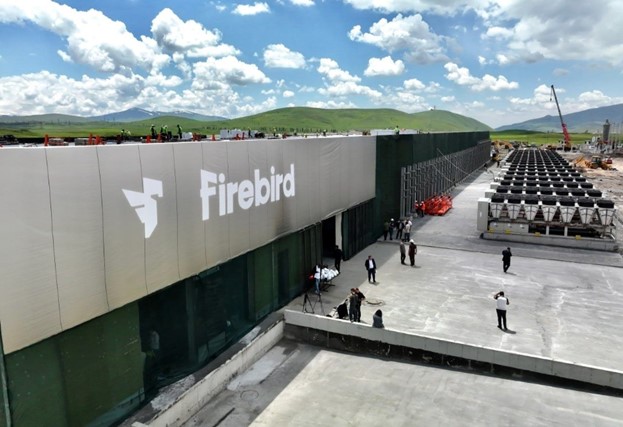
The project is intended to serve as a strategic hub for artificial intelligence computing, cloud services, and high-performance computing (HPC). However, experts warn that the success of such a facility will depend not only on the amount of capital invested but also on the reliability of Armenia’s energy infrastructure. This is where the most significant challenges emerge.

The Biggest Challenge: Power Supply
Despite the scale of the investment, Armenia’s power grid could become the project’s greatest limiting factor.
Modern AI data centers consume enormous amounts of electricity. Large facilities housing tens of thousands of GPUs can require 100–300 MW of continuous power, and even a brief interruption can result in millions of dollars in losses.
At the same time, Armenia’s power system faces several structural risks.
Frequent Power Outages
According to available data, power outages occur four to six times per month, particularly during periods of peak electricity demand in summer and winter.
While such interruptions may be little more than an inconvenience for residential consumers, even a short outage at an AI data center can halt computations, interrupt AI model training, cause data loss, and potentially damage critical hardware.
Limitations of the Transmission Grid
Armenia’s electricity network relies primarily on 220–330 kV transmission lines.
These transmission lines would be responsible for delivering electricity to a hyperscale facility of this magnitude. However, the relatively high frequency of grid failures and overall network instability increases the risk of unexpected outages.
Large hyperscale data centers are typically designed with multiple independent utility feeds and highly redundant electrical infrastructure. Without sufficient redundancy, maintaining continuous operations becomes significantly more difficult.
Cooling Capacity May Be Insufficient
Cooling represents another major concern.
AI servers generate enormous amounts of heat, and modern GPU clusters produce significantly higher thermal loads than traditional enterprise servers.
Armenia primarily relies on conventional air- and water-cooled chiller systems. However, for AI facilities consuming more than 100 MW, these systems may prove insufficient unless advanced direct liquid cooling technologies are deployed at the server-rack level.
The challenge becomes even greater during the summer months, when high ambient temperatures reduce the efficiency of conventional cooling systems.
If cooling systems fail to maintain required operating temperatures, servers automatically throttle performance or shut down entirely to prevent overheating.
Insufficient Backup Power
Another significant concern is emergency power generation.
Available estimates indicate that backup diesel generators can provide only 10–15 MW of capacity.
While this may be adequate for a small data center, a facility consuming over 100 MW would effectively lose most of its operational capability in the event of a complete grid outage.
Modern hyperscale facilities are typically designed with N+1 or even 2N redundancy, allowing critical operations to continue even during major power failures.
Global Statistics Support These Concerns
According to the Uptime Institute’s 2025 annual survey, 54% of major data center outages are caused by power-related failures.
This demonstrates that electrical reliability remains the single most important factor affecting the availability of modern data centers.
For a multi-billion-dollar project, these risks extend far beyond engineering—they become a matter of investment security.
Billions of Dollars Could Be at Risk
Firebird’s project has the potential to become the largest technology investment in Armenia’s history and significantly strengthen the country’s position in the regional digital infrastructure market.
However, due to the poor state of the country’s electricity infrastructure there is a real risk that the multi-billion-dollar investment could become economically unsustainable, leaving investors facing substantial financial losses.


Latest news
Jun 29 6:40 am
Jun 29 6:10 am
Jun 29 5:00 am
